
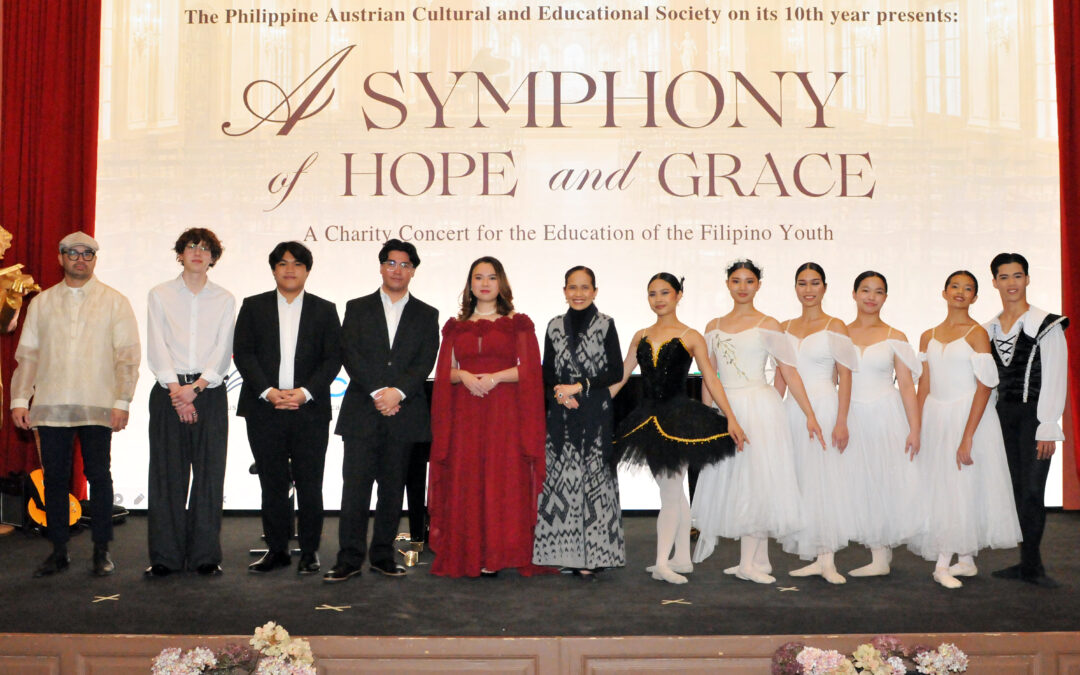
Filipino-Austrian musicians and the visiting dancers of Dance Theatre Manille filled a historic Vienna ballroom on 7 November to support scholarships for talented but underprivileged Filipino youth. (Photo by Stefan Tschirch)
The first music of the afternoon was marked presto con fuoco: very fast, with fire. Played in a Vienna ballroom where the Strauss family once performed, Beethoven’s finale opened a concert that travelled from Bach to Filipino kundiman (art song), from Viennese operetta to a Japanese animated film, and from piano and violin to classical ballet.
A Symphony of Hope and Grace, held at the House of Strauss on 7 November 2026, marked the tenth anniversary of the Philippine-Austrian Cultural and Educational Society (PACES) and supported its scholarship programmes in Science, Technology, Engineering and Mathematics (STEM) and Technical and Vocational Education and Training (TVET). Over two acts and an intermission, the Filipino-Austrian musicians were joined by Dance Theatre Manille, the ballet company that travelled from the Philippines for the occasion, and the afternoon ended with an encore from the full ensemble. The concert combining Filipino and Austrian talents was also a fitting celebration of the 80th year of diplomatic relations between the Philippines and Austria, celebrated in 2026.
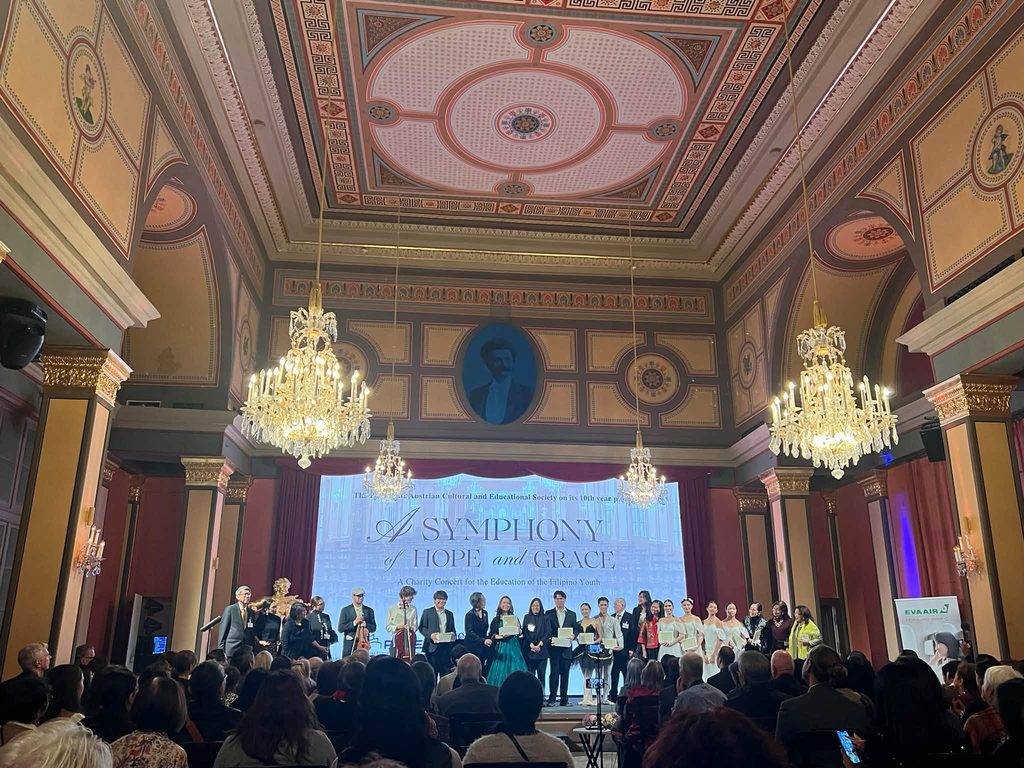
The hall was filled with more than 250 guests who came together in support of PACES and the education of young Filipino scholars.
Prelude: A House Built for the Waltz
The House of Strauss in Vienna’s 19th district opened in 1837 as the Casino Zögernitz, an entertainment house on what was then the leafy edge of the city. Johann Strauss the elder conducted at its opening, and his sons Johann and Eduard later performed there as well. The hall is often described as the only surviving concert hall where the Strauss family played in person.
Later decades were quieter. Parts of the building fell into disuse, and the hall’s acoustics eventually made it a place to record classical music. After an extensive restoration, it reopened in late 2023 as the House of Strauss, its 350-square-metre ballroom restored to its original state and colours.
This November, the room that has known Strauss waltzes since 1837 gave itself over to Filipino song and classical ballet.
Presto con fuoco: The Opening and the Keys
Mark Christopher Tullao opened the concert with the finale of Beethoven’s Piano Sonata No. 18 in E-flat major, Op. 31 No. 3. Composed when Beethoven´s growing deafness was causing him profound distress. This aside, the movement is full of wit, momentum and dance-like energy.
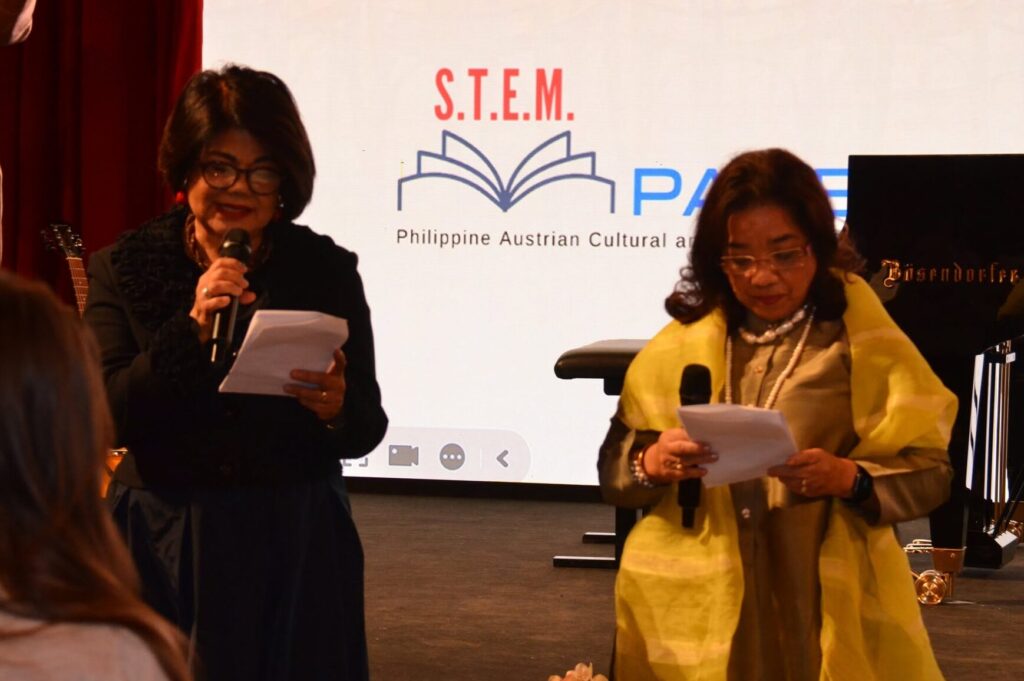
Emcees Nilsa Fischer and Sonia Zerrudo welcomed the guests, and two addresses were delivered.
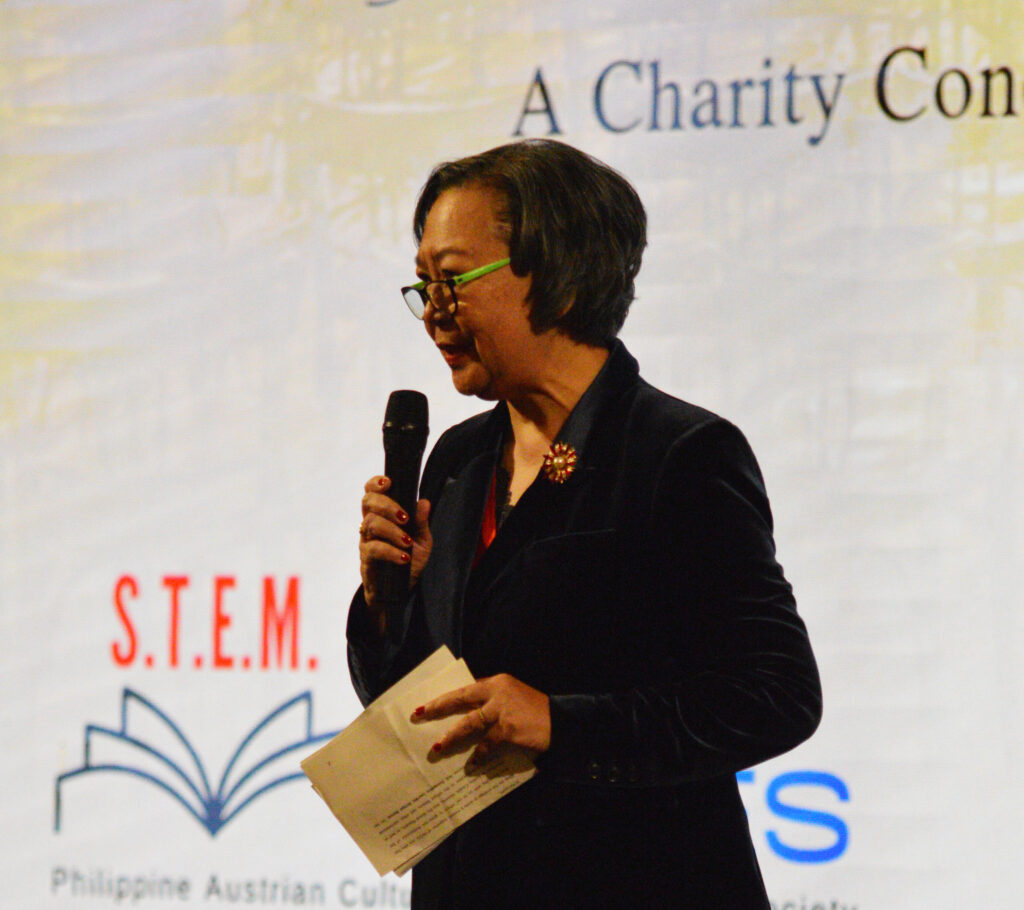
PACES President Dr. Jane Gerardo-Abaya emphasized the importance of education in her remarks:
"When we are confronted by the question, ‘Will you help lift a young person out of poverty?', we are compelled to act. A decisive action is education, which is the way out of poverty for the youth. It's how we could break the cycle of poverty for them and their families, and to give them opportunities–like what we have had – and better lives."
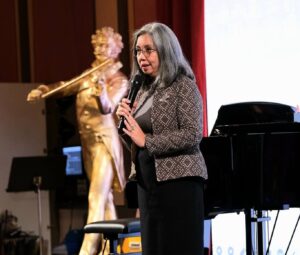
H.E. Evangelina Lourdes Arroyo-Bernas, the Philippine Ambassador, said in her inspirational remarks:
“We have a great need in the Philippines for STEM scholars… The Philippines is now an upper-middle income country. Because of this, we need so many more of our citizens to come back … and to contribute to our society so that we can continue to grow.”
The rest of the piano programme was shared with Mark’s older brother, Joffrey Mark John Tullao, also born in Vienna, and it showed the instrument’s range. Mark played Rameau’s La poule (“The Hen”) for harpsichord, with “co co co” written beneath its opening notes; Sibelius’s Étude, Op. 76 No. 2 which turns a technical study into a vivid miniature; and Malikmata by Antonio Molina, a Philippine National Artist for Music who brought the adventurous harmonies of Filipino concert music to the programme.
Joffrey contributed the youngest repertoire of the afternoon: Zenzenzense, the RADWIMPS song from Makoto Shinkai’s 2016 animated film Your Name, in a piano interpretation. Surely, the youngsters in the hall turned their heads toward the piano in delighted recognition. After the intermission, he opened the second act with the first movement of Beethoven’s Pathétique, its solemn Grave introduction giving way to urgent, impassioned motion.
Cantabile: Voice and Violin
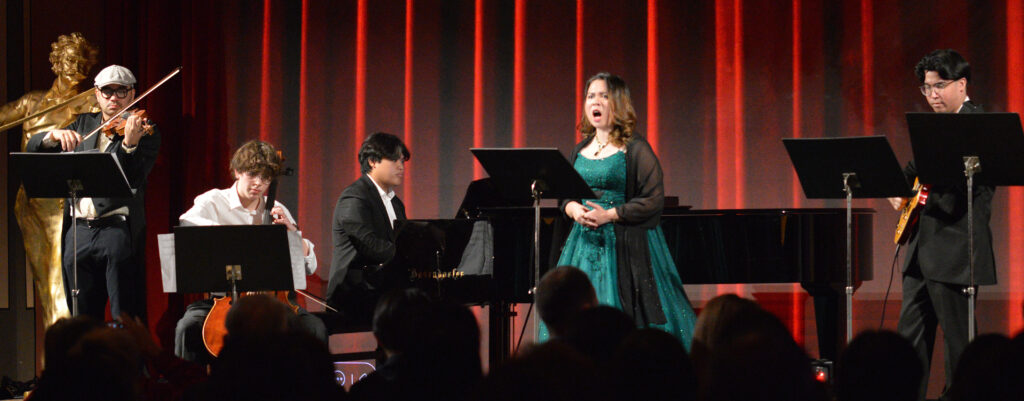
Soprano Maria Isabel Zavala, a graduate of the University of the Philippines Diliman, Gold Prize winner at the 2022 Sugree Charoensook International Music Competition and now a student in Vienna, carried a repertoire that ran from Berlin to Manila to Vienna.
She began with Paul Lincke’s Schlösser, die im Monde liegen (“Castles on the Moon”). By a coincidence of the calendar, November 7 was the 160th anniversary of Lincke’s birth. Her Filipino selections followed: Constancio de Guzman’s Ang Tangi Kong Pag-ibig (“My Only Love”), associated with Filipino actress and singer Carmen Rosales and a 1955 film of the same name, and, in the second act, Mike Velarde Jr.’s Minamahal Kita (“I love you”), heard in the film Niña Bonita. Its gentle waltz character made it a natural fit for a Viennese hall.
Violinist Philipp Goldnagl, whose family has crafted violins, violas and cellos for three generations, closed the first act with Bach’s Chaconne from the Partita No. 2 in D minor, in its roughly twelve-minute version, in which a single violin suggests several interwoven voices and a radiant D major section opens within the surrounding D minor. In the second act, he played Paganini’s Cantabile, a title that means “in a singing manner.”
Zavala returned late in the second act with Johann Strauss II’s Schwipslied, the playful “tipsy song,” adapted from his 1852 Annen-Polka for a later version of the operetta Eine Nacht in Venedig. Fittingly, a salute to the heritage that the House of Strauss celebrates.
Con grazia: Dance Theatre Manille
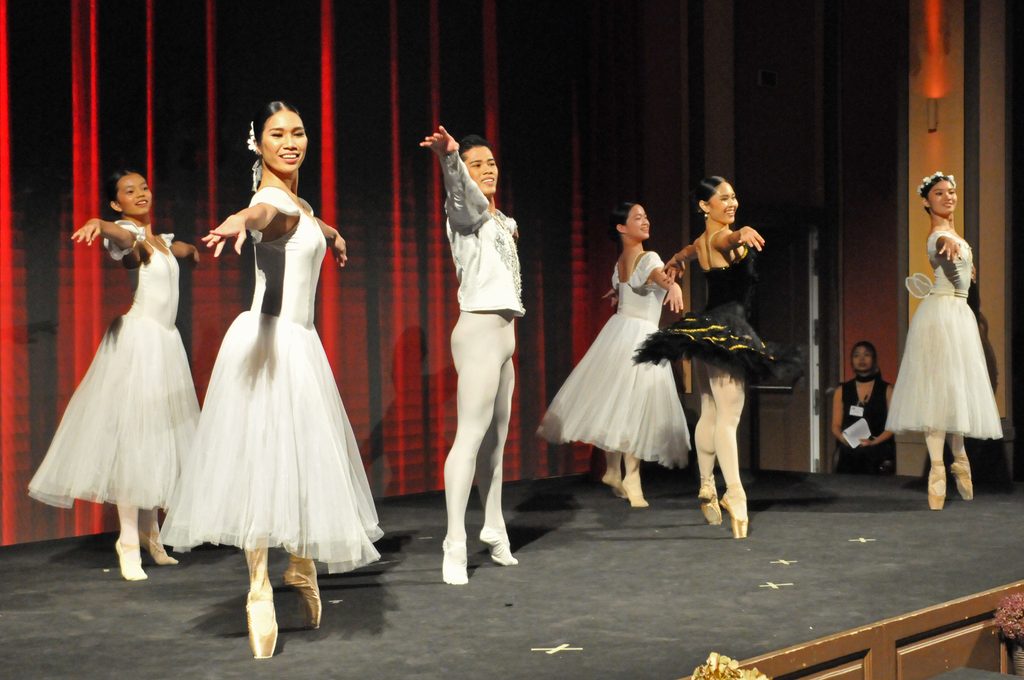
The “grace” in the concert’s title arrived en pointe. Dance Theatre Manille is a classical ballet institution based in the Philippines whose dancers Nadia Juliana Daffon, Carmela Maria Dioko, Lucia Maria Dioko, Gianna Lily Sese, Eira Joanne Tangalin, and Justine Joseph Orande, under the direction of Director/Choreographer Dr. Elinor Dioko, brought three works from the nineteenth-century repertoire to Vienna.
The dancers first appeared early in the first act, right after the addresses, with the Act II pas de deux and coda from Adolphe Adam’s Giselle. In this moonlit scene, the spirit of Giselle protects Albrecht despite his betrayal, a story of forgiveness that the programme described as an especially moving expression of the “grace” celebrated that afternoon.
In the second act, they returned for two works that the running order asked to flow continuously, with no applause or transition between them. The first was the Black Swan pas de deux and variations from Tchaikovsky’s Swan Lake. Here, Odile deceives Prince Siegfried by appearing to be Odette, and the dazzling technique serves a dramatic purpose: the brilliance conceals the betrayal. Beside Giselle’s tenderness, it showed ballet’s theatrical range and the discipline behind its apparent ease.
Without a pause came Kitri’s variation and coda from Ludwig Minkus’s Don Quixote. Centred on the spirited Kitri and her beloved Basilio, its Spanish-flavoured dances radiate confidence and celebration.
Across the three works, the task was the same: to make years of training look weightless, with the poise that gave the concert its second word.
Encore: Multo
After closing remarks from the emcees, the musicians returned for one more piece: Cup of Joe’s Multo, arranged by Mark Christopher Tullao. Maria Isabel Zavala, Philipp Goldnagl, Joffrey Tullao and Mark himself performed it together, with the special participation of Austrian cellist Sebastian Santino Welkhammer.
The night glimmered when the performance became a duet between music and movement, when the dancers of Dance Theatre Manille took the stage and capped the encore by dancing to the pop rock sentimental ballad. At the last note, more than 250 guests rose to their feet in a standing ovation for the artists of the afternoon.
Coda: What the Music Is For
Behind the programme was a mission. For ten years, PACES has helped talented but underprivileged young Filipinos pursue education in STEM and TVET through scholarships. Its scholars, the Society says, are the future engineers, health care professionals, scientists, educators, skilled workers and entrepreneurs who will help build a stronger Philippines.
Each university scholar in the Philippines costs about €1,500 a year in tuition, academic expenses, books and living allowances. Guests could help in three ways: with a €40 concert ticket, which covers the cost of staging the event; with a donation of €35 or more, tax-deductible under Austrian law; or with a €10 ticket for the PACES Fundraising Tombola, whose prizes included a Premium Economy Class EVA Air round trip ticket from Vienna to Asia and twenty “Classics of Austria” concert tickets for two at the House of Strauss.
The Society’s own story had a place in the programme too: a PACES video presentation produced by this author, and played during the ten-minute intermission.
After the encore and a final round of applause, the closing programme began. Gifts of appreciation and certificates were presented to the artists and the tombola was drawn.
The last note bled into the night but the work it paid for continues. Through education, PACES believes, the cycle of poverty can be broken. In a ballroom that has known waltzes since 1837, a community spent an afternoon doing its part, in music and in dance.
Read more about the concert in AustrianPress.com, GMA News Online and ABS-CBN.
- Written by: Pamela Eyre Victoria Lira
About the Author:
Hailing from Leyte, Pamela is currently an Erasmus Mundus Scholar pursuing a double master’s degree in Copernicus Digital Earth at Paris Lodron University of Salzburg, specializing in Geocommunication and Geovisualization. A passionate climate leader, she co-founded Sponge City for SEA and Project KARTAng Isip, the latter exhibited in Queens, New York. She has earned recognition in several national and international writing competitions, including those by the International Atomic Energy Agency, the Magna Carta Observatory, and the Oxford Smith School.

